



















For centuries, beauty standards have dictated how people are supposed to look. This changes based on each culture, but no matter where you are, you get punished if you don’t fit the mold. From corsets that crushed ribs to the breaking of feet to fit into small shoes, the pursuit of “perfection” has usually meant pain. When I look back at old beauty standards, I don’t see a lot of elegance or glamour; I see young women being pressured into conforming for the fear of being seen as less.
Teeth Blackening in Ancient Japan
 In Ancient Japan, women used to cover their teeth with a black, iron-based dye. This was seen as a symbol of maturity. The iron in the dye also helped protect teeth from decay. Some women wouldn’t do it until after marriage, to be seen as maritally committed.
Veiny Cleavage in the 17th-Century
 In 17th-Century England, there was an increase in how much cleavage was shown. Dresses and corsets got lower. Also at this time, it was deemed beautiful to have almost translucent skin. Because of this, women would powder their breasts and draw blue veins to fake having skin that was see-through.
Foot Binding in China
 Although this form of body modification is widely known, its Chinese origins aren’t. Sometime in the 13th century, five- to- seven year-old girls had their feet bandaged tightly while the bones were still growing. This caused the bones in the foot to break, the toes to bend under the foot, and the sole bending down to meet the toes. This was practiced on the “sexual and aesthetic appeal of small feet.” (Mach)
Forehead Plucking
 During the Middle Ages, women would pluck their hairline to create a larger forehead, as that was what deemed a woman attractive in these times.
Long Fingernails
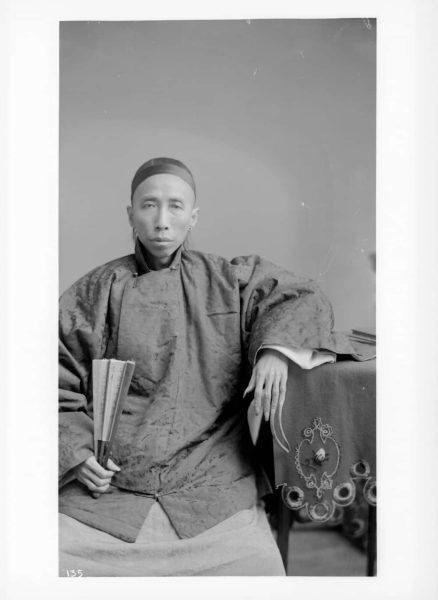 Both women and men in China would grow their fingernails to be anywhere from eight to ten inches long. Because of this, they needed servants to feed and dress them.
Pale Skin
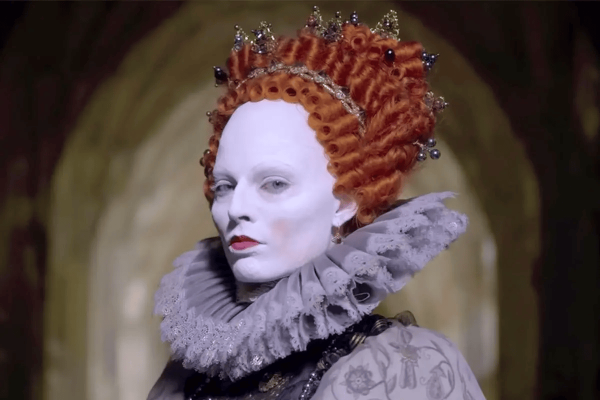 In Europe, pale skin was desired and envied in women. To achieve this, some women would put leeches on their face to drain them of blood for a paler look.
They would also use ceruse, a lead-based white paint. In the Renaissance Era, they added mercury to it for a more intense paint, which created a “silvery sheen” to the skin. (Hine). Unfortunately, too much use of this would add blemishes to the face, and, in extreme cases, cause death.
Horrifyingly, women would take arsenic pills, which promised to lighten skin and brighten eyes. (Goodwin). They didn’t tell these women that using arsenic also leads to organ failure, hair loss, and death.
Radium Girls
 In the early 1900’s, people considered radium a miracle. They thought it would enhance beauty and improve health. People would infuse skincare, toothpaste, and other skin products with radium to give a glow to the skin and/or teeth. Unfortunately, the radium exposure led the girls to radiation poisoning, cancer, and burns. The “Radium Girls” case involved factory workers who painted watches with radium paint. When they got severe burns and illnesses, they proved how dangerous radiation poisoning was.
Corsets
 The first corsets were designed in the 16th century to help women accentuate their breasts and give them a “cylindrical” torso. (Hine). The first corsets acted as a type of barrier between the skin and the dress. However, in the 1800’s, the emphasis on corsets shifted to the waist. Victorian corsets made it hard to breathe or eat and were also dangerous.
One of these corsets was called the “divorce corset.” It was designed to create a gap between the breasts, instead of the high and tight like the past.
Conclusion
Now that I’ve traced the history of beauty standards, it’s clear they were never harmless. These were systems used to shape how women valued themselves and others. Even now, echoes of those old ideals remain, just disguised. The more I dug into this topic, the more I saw how beauty has universally been used as a weapon. We as a people need to understand that beauty shouldn’t hurt.
Works Cited
Goodwin, Nina. “13 Beauty Standards from the Past That Were Painfully Unrealistic.” Wise Old Owl, 26 March 2025, https://wiseoldowl.net/13-beauty-standards-from-the-past-that-were-painfully-unrealistic/.
Hine, Lewis. “Look s that Kill: 11 Impossible Beauty Standards from History.” History Collection, 12 November 2017, https://historycollection.com/changing-face-fashion-11-historical-standards-beauty/.
Mach, Katie. “18 Of The Strangest, Most Dated Beauty Trends From History Katie Mach Katie Mach.” Ranker, 20 June 2024, https://www.ranker.com/list/beauty-standards-from-history/machk.
“The Ugly Truth Behind The Most Outrageous Beauty Standards Around The World.” History Collection, 2 March 2025, https://historycollection.com/the-ugly-truth-behind-the-most-outrageous-beauty-standards-around-the-world/.