





























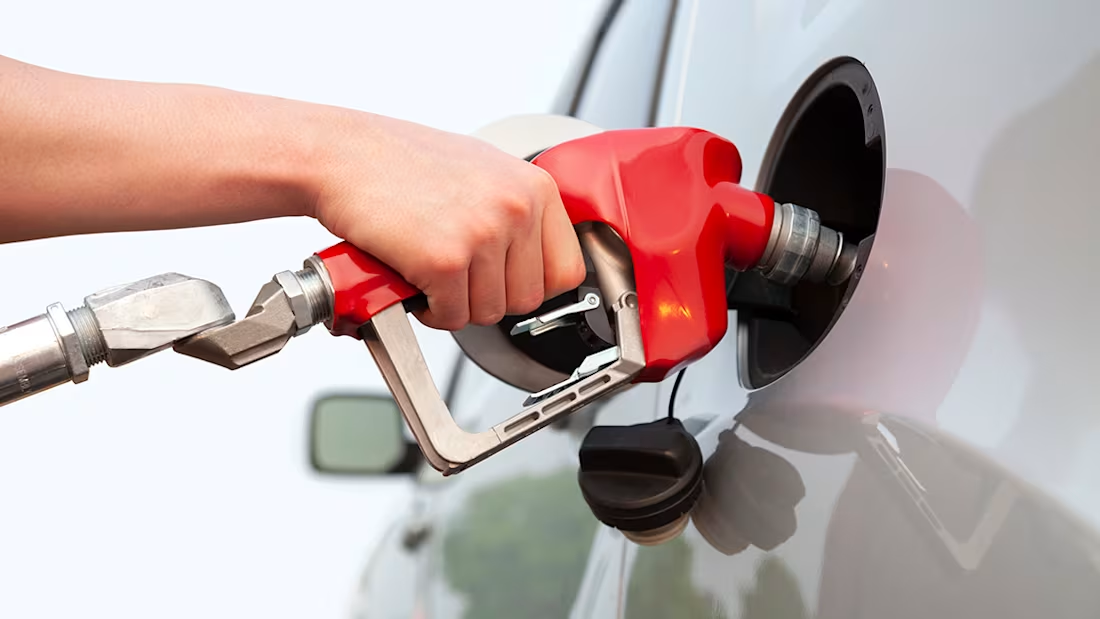
Gas prices have become a major economic concern in 2026, affecting households, businesses, and governments around the world. Over the past few months fuel costs have surged, with the U.S. national average approaching or exceeding four dollars per gallon in many areas. This sharp increase is caused by a combination of geopolitical tensions, supply disruptions, and seasonal demands.
One of the most significant causes is the ongoing conflict in the middle east, particularly involving Iran and the United states. The attack on key oil and gas infrastructure, along the strait of Hormuz which is a critical global shipping route, have reduced the supply of crude oil. As a result, oil prices have risen exponentially and in some cases exceeding one hundred dollars per barrel. Since crude oil accounts for a large portion of gasoline costs, the increase in oil prices quickly translate into higher prices at your local pump.
In addition to geopolitical factors, seasonal trends are also contributing to the rise in gas prices. During spring and summer months, demand typically increases as more people travel. In 2026, this seasonal demand has combined with the already strained supply, accelerating price hikes.
Regional differences further complicate the issue. States like California and Washington are experiencing significantly higher prices due to stricter environmental regulations, higher taxes, and supply chain limitations. Meanwhile , global market dynamics mean that even oil producing countries like the United States are not immune to international price fluctuations.
In conclusion the rising gas prices are affecting us all in different ways but nonetheless is a huge problem for our society.